
AuroraCell 125kW / 250kWh Sodium-Ion Cabinet: A HIGHSTAR Sodium Battery Success Story

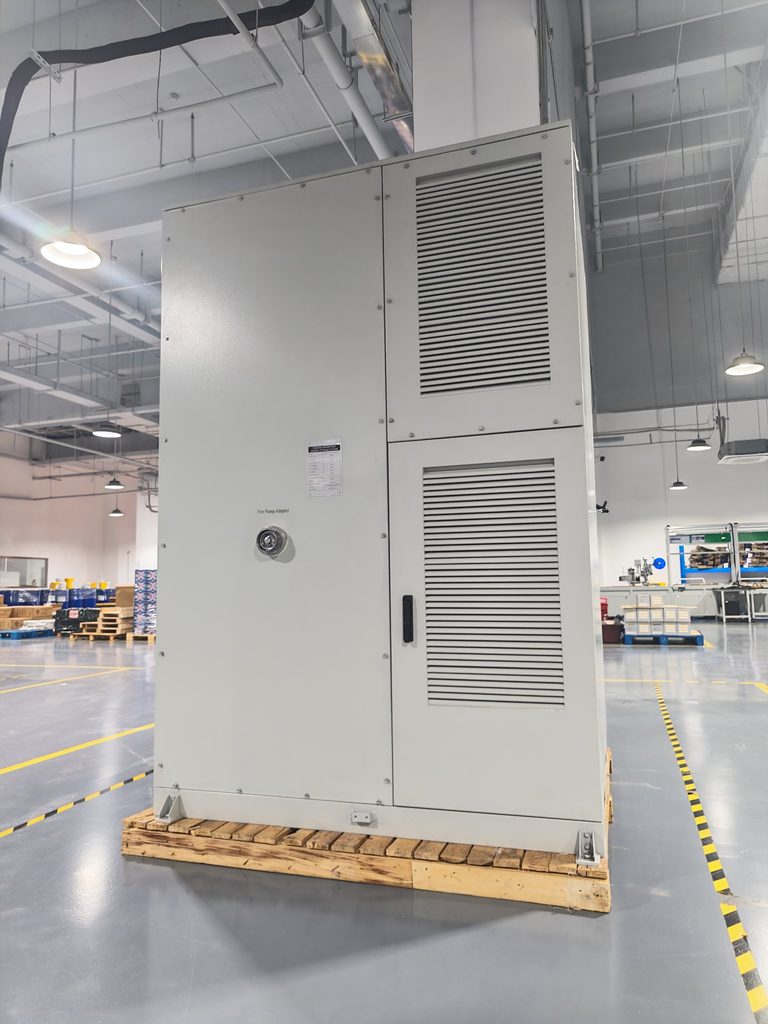
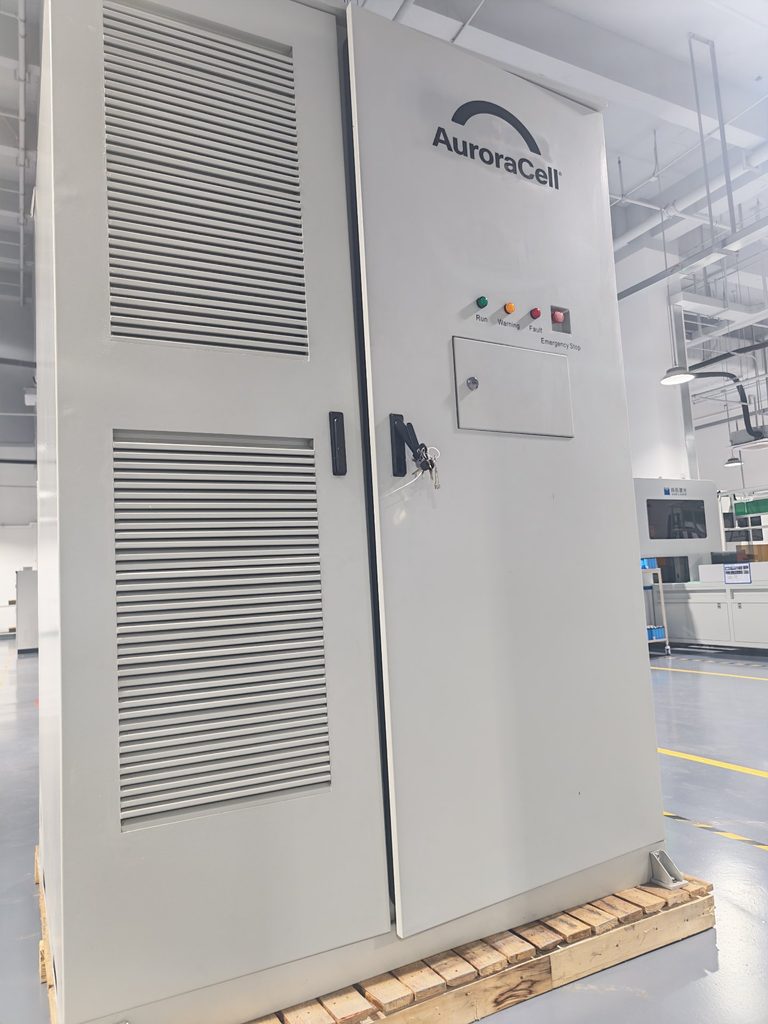
HIGHSTAR SODIUM BATTERY supplied the NFPP sodium-ion cells and battery system for AuroraCell’s 125kW / 250kWh liquid-cooled outdoor storage cabinet, and worked with its integration partner on the cabinet-level build. The cabinet brings ten 1P52S plug-in packs, a 125 kW hybrid inverter, 6 kW liquid cooling and two-layer aerosol fire protection into one IP54 enclosure. This is a verifiable C&I sodium-ion cabinet case: from cell matching to delivery documents, HIGHSTAR organises the scope as one package a buyer can review and accept.
HIGHSTAR is a China-based NFPP sodium-ion battery manufacturer with capabilities from cell and pack to battery systems. The AuroraCell programme shows how that capability turns into delivery: the customer receives a documented battery system inside a factory-integrated cabinet, and engineering and procurement teams can check it in a single review.
Project Overview: One Cabinet, Delivery Defined
| Project element | Detail |
| Case type | Commercial and industrial (C&I) energy storage cabinet |
| Customer / brand | AuroraCell |
| HIGHSTAR scope | 160 Ah NFPP sodium-ion cells and battery system |
| AC output | 125 kW hybrid inverter, externally mounted |
| Rated battery capacity | 250 kWh (delivery specification) |
| Cell and topology | 160 Ah NFPP prismatic cells, 2P260S, ten 1P52S plug-in packs |
| Thermal management | 6 kW liquid cooling, -25 °C to +60 °C, derating above 45 °C |
| Fire protection | Pack-level aerosol + cluster-level aerosol; M32 explosion-relief valve per pack |
| Enclosure | IP54, approx. 3,600 kg, 1460 × 2000 × 2450 mm, excluding inverter |
| Document issuer | Hunan Qibiao New Energy; delivered cabinet carries AuroraCell branding |
The boundary is stated by HIGHSTAR up front. The core delivery in this case is the NFPP cells and battery system HIGHSTAR supplies to the AuroraCell programme, with cabinet-level integration completed together with the project partner; the delivered cabinet carries AuroraCell branding. Our project documents define who is responsible for cells, the battery system, cabinet integration and site commissioning, so the customer sees the full delivery chain at review stage rather than having to divide it up after a problem occurs.
Why This Case Matters to Similar Buyers
The most relevant readers are not looking for a single cell. They are trying to deliver a storage system that passes review, fits a constrained site, and can be maintained without ambiguity.
- Industrial and park operators need peak shaving and backup power but do not have the space or civil works budget for a container farm.
- EPCs and system integrators need defined battery interfaces, fire-protection logic and EMS protocols to avoid rework on site.
- Distributors and project developers need a real, documented configuration they can explain to end customers.
- HSE and operations teams care less about the phrase “safer chemistry” and more about where suppression devices sit, how heat is removed, and how a pack is serviced.
This case is useful because it turns those questions into inspectable hardware and delivery documents customers can check.
What HIGHSTAR Brings to This Programme
1. Cell-to-battery-system scope, not a single-part claim
HIGHSTAR’s role is the 160 Ah NFPP sodium-ion prismatic cell and the battery system built around it. For a customer, that means performance and safety questions can be traced through cell → plug-in pack → battery system → cabinet integration, instead of disappearing behind a generic brand label.
2. Safety engineered as a structure, not a slogan
The cabinet does not rely on NFPP chemistry alone. Each plug-in pack carries its own aerosol device and M32 explosion-relief valve; the protected zone adds a second aerosol layer; liquid cooling, BMS acquisition and EMS alarms complete the design. HIGHSTAR has also published UL 9540A test results for its sodium-ion cell — a test report, not a UL 1973 or IEC 62619 certificate, and the two should be reviewed separately.
3. Delivery discipline you can inspect, not a one-off shipment
Delivery does not end when a cabinet leaves the factory. On this project HIGHSTAR’s capability is visible in four checks: 160 Ah NFPP prismatic cells matched into a 2P260S, 250 kWh battery system; cabinet-level integration of ten plug-in packs, liquid cooling, fire protection and EMS with the integration partner; a specification package with cell-level test reports and interface lists; and logistics organised around 30% SOC at dispatch, UN 3536 transport and defined storage SOC. What the customer receives is a system that can be accepted against documents, not a set of numbers to assemble.
4. A product path from home battery to cabinet to container
The same 160 Ah NFPP cell platform underpins HIGHSTAR’s published portfolio across scales: the 48V160Ah wall-mounted residential sodium-ion battery for homes, the 160 Ah NFPP cell at the core of this cabinet, the SALT110 100kW / 115kWh cabinet and the 2.3MWh containerised BESS. That lets a customer evaluate a residential system, a pilot cabinet and a larger deployment using the same technical language.
For customers, the value is straightforward: HIGHSTAR can discuss the cell, the battery system, safety evidence, delivery documents and the expansion path in one review.
Why a 125kW / 250kWh Cabinet Fits Commercial and Industrial Sites
A quarter-megawatt-hour in one cabinet is a practical middle ground. It is large enough to shift meaningful peak demand, yet small enough to sit on a pad beside a factory or warehouse.
- Peak shaving and valley filling. The EMS can follow a planned charge/discharge curve, reducing demand charges in expensive hours and recharging off-peak. The local SIM card for remote telemetry is inserted by the customer.
- Backup and off-grid operation. The 125 kW hybrid inverter supports grid-tied and off-grid modes. During a grid outage it draws on stored battery energy and real-time PV where available, with anti-islanding, insulation-impedance and AC overcurrent protection.
- One deliverable unit. Factory integration reduces on-site wiring and commissioning, and makes the battery-system responsibility boundary easier to define.
For the wider chemistry rationale, see why choose sodium-ion batteries.

What Is Inside the Cabinet?
The 250 kWh cabinet is an all-in-one machine. The subsystem list matters more than the headline capacity, because these are the items a buyer specifies and inspects.
| Subsystem | Specification |
| Battery plug-in pack × 10 | 1P52S, 160 Ah, 25 kWh nominal, 156 V nominal, 78–179.4 V range; intelligent liquid cooling |
| High-voltage box (PDU) | 1500 V max, 250 A rated; breaker, fuses, contactors and master BCU |
| Liquid cooling unit | 6 kW cooling, 50 L/min flow, 90 kPa supply, R410A, COP 2.1, 2 kW heating, ≤75 dB(A) |
| Fire protection | Pack-level aerosol + cluster-level aerosol |
| EMS | Fanless, no rotating disk; power-tracking response, planned-curve operation, telemetry and remote control |
| Hybrid inverter (125K) | 125 kW / 125 kVA, 250 kW max PV input, 10 MPPT / 20 strings, 97.5% peak efficiency, IP66, transformerless, 7″ LCD |
Each plug-in pack is a serviceable energy unit with its own liquid-cooling loop, BMS acquisition module and external interfaces: orange positive and black negative sockets, an M32 explosion-relief valve, BMS communications, and Φ14 coolant inlet and outlet. That interface list should be written into the maintenance plan before delivery.
How Fire Protection Is Implemented: From Material Layer to System Protection
Material layer: NFPP lowers starting risk but does not replace system validation
NFPP chemistry is the starting point. HIGHSTAR’s published cell-level UL 9540A test report provides evidence beyond a general “sodium-ion is safer” claim. A test report is not the same as a product certificate; buyers should request the exact report and the exact certificate where a project requires one.
Fire layer: two aerosol levels, not one generic extinguisher
Pack level. Every plug-in pack contains a module-level aerosol device that needs no external power. A heat-sensitive detection wire senses rapid temperature rise and triggers suppression inside the pack, targeting an incipient event at its source. This meets the pack-level fire-protection requirements of GB/T 42288. Each pack also has an M32 explosion-relief valve.
Cluster level. Smoke and heat detectors in the protected zone feed the EMS and alert site staff via indicator lights. A second aerosol volume inside the cabinet suppresses flame and limits spread if a pack-level event escalates.
Thermal and electrical layer: cooling, isolation and alarms
A 6 kW liquid-cooling unit manages pack temperature across a -25 °C to +60 °C operating window, with derating above 45 °C. The PDU, BMS and EMS add isolation, monitoring and alarms. Layered protection is the point: suppression media is used where it is most effective rather than flooding the whole enclosure.
What Do the Technical Parameters Say?
These are the headline figures from the 125kW / 250kWh delivery specification. Round-trip efficiency excludes the cabinet’s own auxiliary loads, and derating begins above 45 °C and 2,000 m — both should be built into a site model.
| Parameter | Value |
| Cell type | NFPP-3V-160Ah (160 Ah) |
| System configuration | 2P260S |
| Rated battery capacity | 250 kWh |
| Nominal voltage | 780 V (range 390–897 V) |
| Fire protection | Pack-level aerosol + cluster-level aerosol |
| Round-trip efficiency | ≥92% (excluding cabinet auxiliary consumption) |
| Charge / discharge rate | 0.5P, constant power |
| Cycle life | ≥6,000 cycles |
| Ingress protection | IP54 |
| Cooling | Liquid cooling |
| Operating temperature | -25 °C to +60 °C (derating above 45 °C) |
| Operating humidity | 0–95% RH, non-condensing |
| Communications | Ethernet / RS485; Modbus TCP / Modbus RTU |
| Altitude | ≤3,000 m (derating above 2,000 m) |
| Dimensions (D × W × H) | 1460 × 2000 × 2450 mm, excluding inverter |
| Weight | approx. 3,600 kg |
| Standards referenced | GB/T 36276, GB/T 34120, GB/T 34131, UN 38.3, IEC 62619, CE-EMC |
Where Delivery Capability Shows Up: From Factory to Site
HIGHSTAR manages the AuroraCell project as one delivery, not a single cell shipment.
| Delivery stage | What HIGHSTAR does | What the customer receives |
| Cells and matching | 160 Ah NFPP prismatic cells configured 2P260S into a 250 kWh battery system | One chemistry and one specification version across cells and battery system |
| Cabinet integration | Ten 1P52S plug-in packs, 6 kW liquid cooling, two aerosol layers and EMS integrated at the factory with the partner | Less on-site wiring and commissioning, with clear subsystem interfaces |
| Safety evidence | Cell-level UL 9540A test results, fire-protection logic and detector layout | Test-report samples and layout notes that can accompany the specification package |
| Documents and traceability | 250 kWh delivery specification, interface list, transport and storage requirements | A document set that can enter the technical agreement and acceptance checklist |
| Expansion path | From the SALT110 115kWh cabinet to the 2.3MWh container | A larger deployment described in the same technical language |
One controlled specification version is part of delivery: this project is governed by the 125kW / 250kWh specification, and capacity, voltage and cycle-life figures are locked to that document in the technical agreement. Customers do not have to choose between competing sets of numbers.
How Is the Cabinet Shipped and Stored?
Transport and storage are part of the safety case, not fine print.
- The cabinet leaves the factory at 30% SOC with all power-circuit disconnectors open; inter-pack series cables and high-voltage-box cables are removed for transport safety.
- The all-in-one assembly is transported under UN 3536 requirements and can move by truck, rail or ship.
- Road speed is limited to 80 km/h on class I/II highways and 36 km/h on class III roads; the cabinet must show no deformation or functional damage on arrival.
- For storage, keep SOC between 30% and 50%. If storage is expected to exceed one month but not three, run one charge/discharge cycle first to bring SOC back into that window.
What HIGHSTAR Puts in the Delivery Package
- One controlled 250 kWh specification — cell type, nominal voltage and cycle-life figure fixed in the signed specification.
- Usable kWh at the intended depth of discharge, not just rated capacity; the ≥92% efficiency figure excludes the liquid-cooling auxiliary load.
- Fire-protection evidence — pack-level and cluster-level aerosol layout, detector logic, and the actual test report number versus certificate.
- The inverter interface list — PV input, grid code, CAN/RS485 mappings and EMS protocol — against the site single-line diagram.
- Transport and storage documents — current UN 3536 / UN38.3 paperwork and the agreed arrival SOC.
Frequently Asked Questions
Who should consider this 125kW / 250kWh configuration?
Industrial and commercial site owners, industrial-park operators, EPCs, system integrators and project developers evaluating a 100–300kWh cabinet for peak shaving, backup or solar-plus-storage. The advantage is a small footprint, factory-integrated subsystems and a battery-system boundary that can be reviewed as a document.
Is this sodium-ion cabinet the same as an LFP container?
No. It uses NFPP sodium-ion cells in a single liquid-cooled outdoor cabinet, with pack- and cluster-level aerosol protection. An LFP container typically uses a different chemistry, larger format and different fire-protection design. The sodium-ion versus LFP safety comparison sets out the evidence.
Can it run off-grid?
Yes. The 125 kW hybrid inverter supports grid-tied and off-grid operation, drawing on stored battery energy and real-time PV during a grid outage. It also provides anti-islanding, insulation-impedance and AC overcurrent protection.
How long does the battery last?
This project’s 250 kWh delivery specification states ≥6,000 cycles at 0.5P constant power. The cycle-life figure and its test conditions are written into the delivery documents for acceptance and warranty traceability.
Does the cabinet need a fire-water system?
The specified protection is pack-level plus cluster-level aerosol with explosion-relief valves, not water spray. Any additional site fire-water requirement is determined by local fire code and the project’s fire strategy.
Can HIGHSTAR support system integration?
HIGHSTAR supplies NFPP sodium-ion cells and battery systems, and works with integration partners on cabinet-level programmes such as this AuroraCell case. Customers can bring cell selection, battery-system boundaries, safety evidence and the expansion path into the same technical review. Browse the full product range or contact the technical team for a specification review.
Conclusion
The AuroraCell cabinet shows what a C&I sodium-ion project looks like when the cell, battery system, safety design and delivery documents are organised by one supplier. For HIGHSTAR, the value is not a single headline number; it is the ability to turn cell manufacturing, battery-system integration, safety evidence and document delivery into a capability package that can be reviewed and accepted — and to scale a customer from a 115kWh cabinet to a 2.3MWh container along the same technical path.
To request the specification package, sample test reports, or discuss a C&I sodium-ion storage project, contact the HIGHSTAR SODIUM BATTERY technical team at info@highstar-sodium.com, or for solution consulting at sales@highstar-sodium.com.
Further Reading
- 160Ah NFPP Sodium-Ion Prismatic Cell — the cell at the core of this cabinet.
- 48V160Ah Wall-Mounted Residential Sodium-Ion Battery — the home battery built on the same 160Ah cell platform.
- 2300kWh Container Sodium-Ion BESS — the containerised scale-up option.
- SALT110 Liquid-Cooled Sodium-Ion Cabinet — a 100kW / 115kWh cabinet in the same family.
- Contact HIGHSTAR SODIUM BATTERY — for specification review and project consulting.
Product references: 160Ah NFPP Sodium-Ion Prismatic Cell — https://www.highstar-sodium.com/product/160ah-nfpp-sodium-ion-prismatic-cell/ · 48V160Ah Wall-Mounted Residential Sodium-Ion Battery — https://www.highstar-sodium.com/product/48v160ah-wall-mounted-residential-sodium-ion-battery/ · SALT110 100kW/115kWh Cabinet — https://www.highstar-sodium.com/salt110-the-100-kw-115-kwh-liquid-cooled-sodium-ion-storage-cabinet-subsystem-by-subsystem/ · 2.3MWh Container BESS — https://www.highstar-sodium.com/product/2300kwh-container-sodium-ion-bess/


