Analysis of sodium-ion batteries used for AIDC in Year 2026
.png "Analysis of sodium-ion batteries used for AIDC in Year 2026")
There are 3 core pain paints of AIDC Power Supply
- Power Spikes. The inference and training of a trillion-parameter model causes the GPU load to spike from extremely low to peak within microseconds, triggering severe harmonics and voltage collapse in traditional power grids.
- Thermal Runaway. The Current BBUs are evolving towards 800V HVDC , and the power density of a single Vera Rubin rack has exceeded the physical limit of 140kW~300kW. Traditional lithium batteries have low thermal runaway temperatures and release heat intensely. Under high-voltage conditions, if an arc or single-cell thermal runaway occurs, it will trigger a chain reaction explosion and destruction of the cabinet.
- Conversion Losses: The multiple conversions from AC to DC in a traditional AC UPS can result in a huge energy waste of over 7% to 10% and secondary heat generation in a Rubin AIDC with a capacity of tens of thousands of kilowatts.
-1024x575.png "Analysis of sodium-ion batteries used for AIDC in Year 2026")
Why Sodium Ion battery is suitable for AIDC
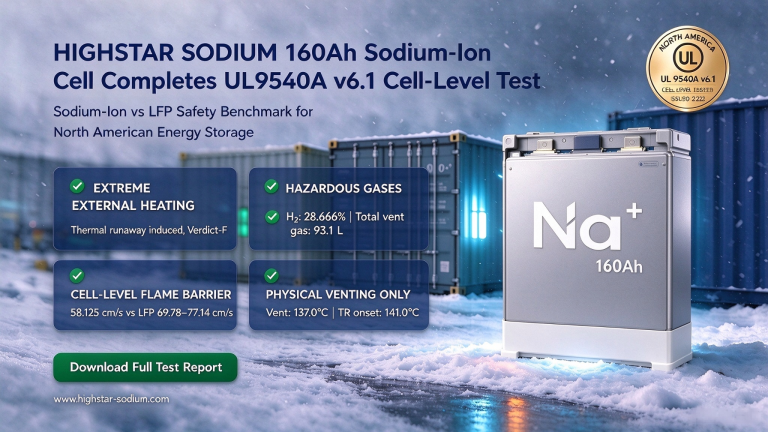
- Intrinsic safety: Sodium ion batteries have a higher internal resistance than lithium batteries, and their transient heat release during external short circuits or overcharging is much lower than that of lithium batteries. Their thermal runaway trigger temperature is as high as 260°C or more (ternary lithium batteries are about 180°C, LFP batteries are about 210°C), and they do not release oxygen during thermal runaway, possessing intrinsic safety characteristics of “non-combustible and no explosive chain reaction.” This is a decisive safety guarantee for high-voltage AIDC (AIDC).
- Perfect pulse discharge and dynamic response: Sodium ions have higher conductivity in polar solvents. This gives sodium ion batteries an inherently extremely high discharge rate capability (3C~6C under normal conditions, and over 10C in pulses), and extremely low heat generation under high current discharge, making them a perfect replacement for super-capacitors and able to withstand the microsecond-level power pulses that cause a sudden surge in AI computing power.
- Zero-Voltage (0V) in Transportation and Storage: Aluminum foil can be used for both the positive and negative electrodes of sodium ion batteries, allowing them to be transported while discharged to 0V. During the installation and logistics phases in the computer room, the safety factor reaches the physical limit, eliminating the high risk of spontaneous combustion associated with transporting lithium batteries while they are charged.
- Extremely wide operating temperature range: Sodium batteries retain over 75% of their capacity even at -40°C. This feature allows AIDC’s outdoor UPS containers to utilize free-air cooling, saving data centers significant HVAC electricity costs.
A comparative analysis of the parameters of NFPP Sodium Ion Battery, LFP Battery and NMC Battery for AIDC
| Technical indicators | Recommended solution: NFPP SIB | Current solution: LFP Battery | High-density solution:NMC Battery | Tactical significance of 800V HVDC for AIDC |
| Mass energy density | 100-140WH/KG | 160-200WH/KG | 250-350WH/KG | When deploying in outdoor containers, weight is not the core pain point. |
| Volumetric energy density | 250-320WH/L | 350-450WH/L | 600-700WH/L | Disadvantages: NFPP SIB is not suitable for installation in high-density GPU racks. |
| Thermal runaway | > 260 °C(extremely safe) | ~210 °C | ~180 °C(High risk) | Absolute Advantage: Withstands 800V high-voltage arc and thermal runaway without propagation. |
| Instantaneous discharge capability | 6C-10C(Extremely Strong) | 1C-3C | 2C-4C | Absolute Advantage: Perfectly absorbs microsecond-level computing power pulses from the 800V bus. |
| High voltage series consistency | Excellent(small rate of change in resistance) | So-so | Poor (Likely referring to a weakest link in a system) | Key Advantage: Reduces the complexity of BMS management for 800V ultra-long series-connected cells. |
| Operating temperature range | -40 °C to 70 °C | -20 °C to 60 °C | -20 °C to 55 °C | Absolute Advantage: Outdoors, no need for high-energy-consuming cooling air conditioning |
Highstar Sodium Offers 800V Direct-to-Bus Topology for AIDC
-1024x575.png "Analysis of sodium-ion batteries used for AIDC in Year 2026")
- Eliminates Inverter Stage: The sodium ion battery pack is directly connected to the 800V bus via high-voltage bidirectional SIC (silicon carbide) buck-boost converter.
- Zero-ms Seamless Transfer: When the external power grid fails, the Power system can directly supply a large current to the 800V DC bus within 0 milliseconds, stabilizing the bus voltage with ultra-high power and completely eliminating the risk of Rubin server crashes due to transient voltage dips.
- Exclusive Safety Protection: Combining a high-precision active balancing BMS, high-speed electronic fuses (e-Fuse), and intelligent arc detection (AFCI), the probability of DC arcing in the 800V high-voltage DC system is reduced to near zero.
The control strategy of Sodium Ion Cabinet BESS for AIDC
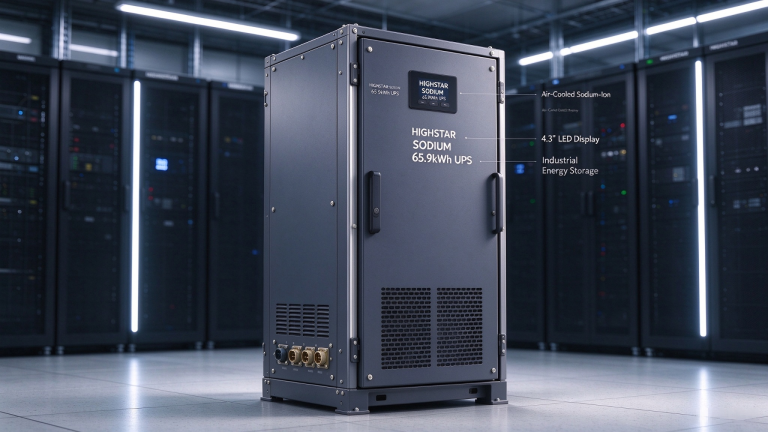
To address extreme dv/dt fluctuations, A smart high-rate 800V sodium ion cabinet BESS that establishes three lines of voltage control defense through precise hardware and software collaboration:
1. Microsecond-level hardware active inertia compensation (0-100μs): High-voltage film capacitors physically discharge to compensate for the initial transient voltage gap.
- High-frequency SiC converter closed-loop dynamic adjustment (0.1ms-2ms): Equipped with 100kHz high-frequency bidirectional SiC voltage regulator converter chip, it forcibly activates Boost mode within 0.5ms, precisely locking the voltage at 780 VDC, a response speed 5 times faster than traditional lithium-ion battery converters.
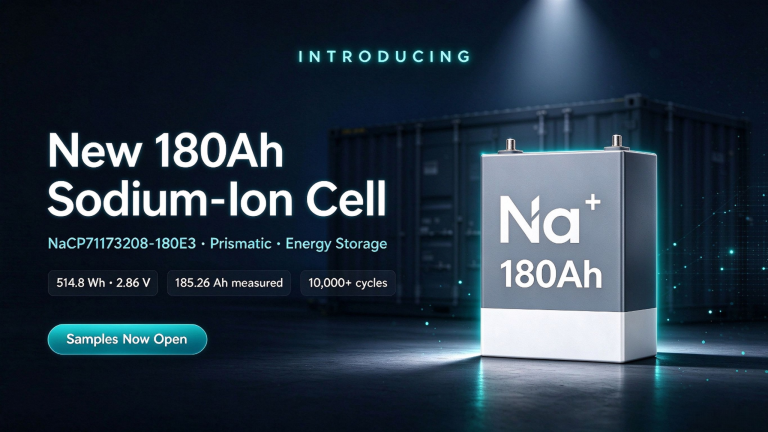
- High-C sodium cells provide direct high-current supply (over 2ms): When computing power peaks are sustained, 6C~10C high-rate NFPP sodium ion cells leverage their extremely low internal resistance to continuously supply chemical energy, without causing localized overheating or premature aging of the battery itself.
Conclusions and Recommendations
In the dramatic shift of AIDC towards the NVIDIA Vera Rubin platform and the era of 800V HVDC pure DC high voltage, sodium-ion batteries have become the best “zero-latency, intrinsically safe” backup power solution for 800V DC buses.
This paper strongly recommends that AIDC operators, when planning next-generation AI data centers, should decisively choose Highstar Sodium’ 800V outdoor pure DC sodium-ion battery storage systems and centralized smart sodium-ion battery cabinets as core standard facilities. This will allow them to achieve the highest energy efficiency with the lowest initial construction cost, working in conjunction with Highstar Sodium to fully embrace a new era of green, safe, and highly flexible AI computing power.